

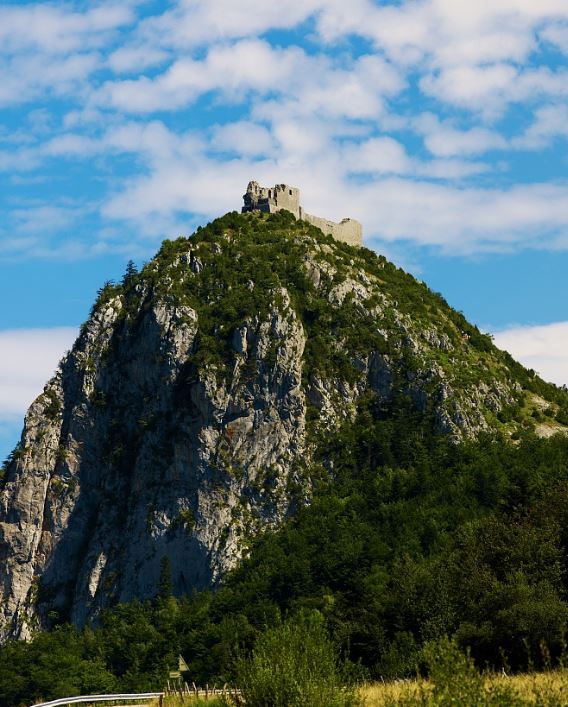
Perched atop a rocky peak in the Ariège region of southwestern France, the ruins of Montségur Castle stand as a haunting reminder of one of the most tragic and enigmatic episodes in medieval history. This fortress, once the last stronghold of the Cathars, witnessed a brutal siege and the mass execution of its defenders, cementing its place in both historical and legendary narratives. Today, Montségur is not just an archaeological site but also a symbol of resistance, religious persecution, and enduring mystery.
A Brief Introduction to the Cathars
To understand the significance of Montségur, one must first grasp the essence of the Cathar movement. The Cathars, also known as “Good Christians,” were a religious sect that emerged in the 12th century in southern France. They rejected the materialism and corruption of the Catholic Church, advocating for a dualist belief system where the world was divided into a realm of pure spirit (good) and the physical world (evil). Their teachings condemned wealth, hierarchy, and the established religious structures of the time, making them enemies of the Catholic Church.
Pope Innocent III launched the Albigensian Crusade (1209–1229) to eradicate the Cathars, leading to widespread massacres, destruction, and persecution. Despite heavy suppression, pockets of Cathar resistance remained, with Montségur becoming the most formidable of their last strongholds.
The Fortress of Montségur
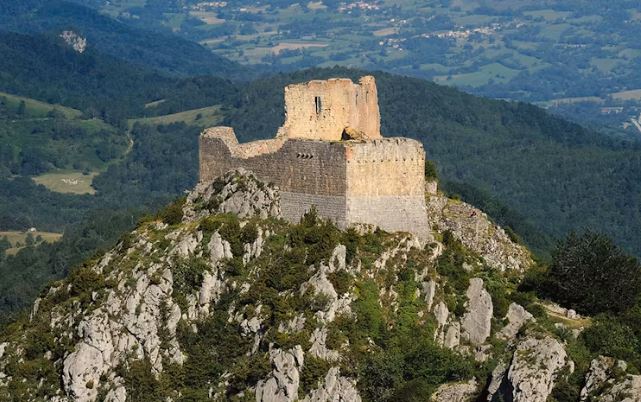
Montségur was built in a strategic location at an altitude of 1,207 meters (3,960 feet), offering a panoramic view of the surrounding landscape. The first known fortifications date back to the early 13th century, when Raymond de Péreille, a Cathar sympathizer, reinforced the site to provide refuge for the persecuted sect.
The castle was almost impregnable due to its steep cliffs and narrow access routes. It served as a military and spiritual center for the Cathars, housing perfects (the most devout Cathars), soldiers, and refugees fleeing Catholic persecution. From its heights, the inhabitants could spot approaching enemies long before they reached the fortress.
The Siege of Montségur (1243–1244)
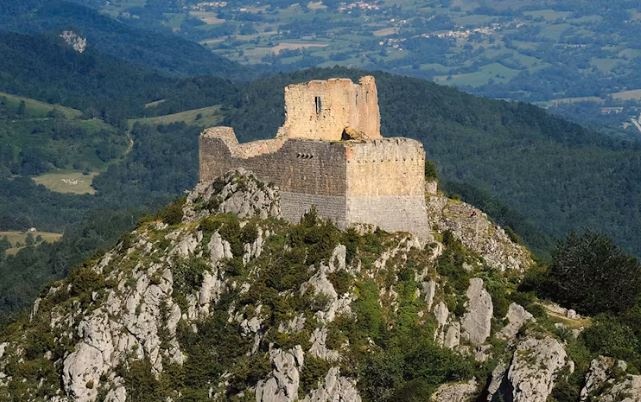
Montségur’s resistance came to a dramatic climax in 1243 when the French royal army, led by Seneschal of Carcassonne Hugues des Arcis and Bishop of Albi Durand of Beaucaire, laid siege to the fortress under orders from the Pope. Around 200 Cathars and defenders, including knights and civilians, were trapped within the castle.
The siege lasted for ten months. The besieged managed to hold out through sheer determination, their superior knowledge of the mountainous terrain, and periodic supply deliveries from allies. However, in the winter of 1243–1244, the attackers escalated their efforts, constructing siege engines and launching relentless assaults.
By March 1244, starvation, exhaustion, and constant attacks had worn down the defenders. The Cathars finally surrendered on March 16, 1244, under the condition that those who renounced their faith would be spared. However, nearly 200 Cathars chose martyrdom over conversion.

The Massacre: A Tragic End
Following their surrender, the Cathars were led down the mountain and burned alive in a massive bonfire at the base of the fortress. This site, now known as the “Prat dels Cremats” (Field of the Burned), remains a solemn memorial to their sacrifice.
The execution of the Cathars at Montségur marked the effective end of Catharism as an organized movement in France. Though some survivors continued to spread Cathar beliefs in secret, the Inquisition, established by the Catholic Church, relentlessly hunted them down.
Legends and Mysteries of Montségur
The story of Montségur is not just one of history but also of myth and mystery. Over the centuries, various legends have emerged, further romanticizing the site and deepening its enigmatic allure.
1. The Holy Grail Connection
Some theories suggest that Montségur was linked to the Holy Grail. Occultists and esoteric researchers believe the Cathars possessed a sacred treasure—perhaps even the Grail itself—which they smuggled out of the castle before its fall. This theory has inspired novels, documentaries, and treasure hunters seeking lost relics.
2. A Place of Solar Worship?
Montségur’s architecture and location have led some to speculate that it was a site of ancient solar worship. Every year, during the summer solstice, sunlight penetrates a specific window of the fortress, aligning perfectly with the rising sun. This has sparked theories that the castle was built following sacred geometric principles.
3. The Ghosts of Montségur
With its tragic past, Montségur has earned a reputation as a haunted site. Visitors and paranormal enthusiasts report strange lights, eerie whispers, and an overwhelming sense of sadness near the Prat dels Cremats. Some claim to feel the presence of the lost Cathars still lingering in the ruins.
Montségur Today: A Pilgrimage Site
Today, Montségur stands as a testament to religious persecution, resilience, and mystery. Tourists, historians, and spiritual seekers make the trek up the steep path to explore the ruins, pay their respects, and absorb the breathtaking views of the Pyrenees. The castle’s haunting beauty and tragic history continue to captivate all who visit.
Key Attractions at Montségur
- The Castle Ruins – Though only remnants of the walls and foundations remain, they offer a glimpse into medieval fortifications.
- The Prat dels Cremats – The site where 200 Cathars were burned at the stake, marked by a commemorative plaque.
- The Montségur Museum – Located in the nearby village, this museum provides artifacts, exhibits, and in-depth information about the Cathars and the siege.
Conclusion
Montségur Castle is more than a historical ruin; it is a symbol of resistance, faith, and mystery. Its dramatic past, filled with both tragedy and intrigue, ensures its place among the most fascinating medieval sites in France. Whether you visit for its historical significance, its breathtaking views, or its legendary connections, Montségur offers an unforgettable journey into one of history’s most enigmatic chapters.
Discover more from French Glimpses
Subscribe to get the latest posts sent to your email.
