
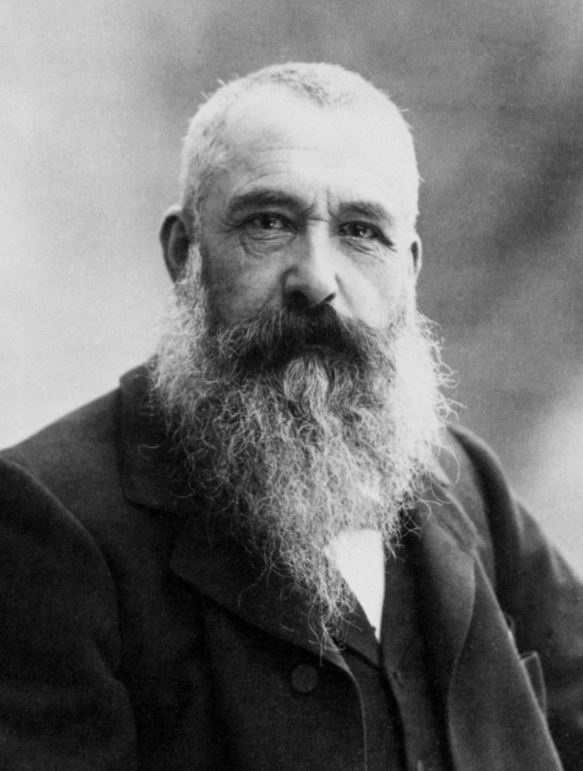
Claude Monet, one of the most influential painters in history, is celebrated as the father of Impressionism, a revolutionary art movement that changed the course of modern painting. His ability to capture fleeting moments, the play of light, and the nuances of color has left an indelible mark on the art world. Monet’s work not only redefined artistic conventions but also inspired generations of artists to view the world through a different lens.
Early Life and Artistic Beginnings
Born on November 14, 1840, in Paris, Oscar-Claude Monet was raised in Le Havre, a coastal town in Normandy. From an early age, he displayed a keen interest in drawing, often sketching caricatures of people around him. His artistic talent did not go unnoticed, and he was encouraged to pursue formal training. However, Monet’s inclination towards capturing nature and its ever-changing moods set him apart from traditional academic painters.
In 1859, Monet moved to Paris, where he enrolled at the Académie Suisse. There, he met fellow artists such as Camille Pissarro and Pierre-Auguste Renoir, who would later become key figures in the Impressionist movement. During this period, Monet was influenced by the works of landscape painters like Eugène Boudin and Johan Barthold Jongkind, both of whom emphasized painting en plein air (outdoors) to capture the natural world with spontaneity.
The Birth of Impressionism
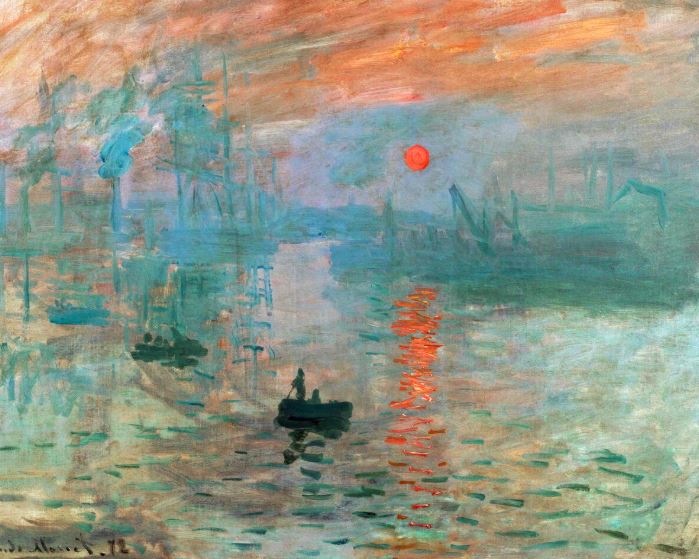
Monet’s career took a defining turn in the early 1870s. In 1872, he painted Impression, Sunrise (Impression, soleil levant), depicting the port of Le Havre at dawn. The painting’s loose brushwork, vibrant colors, and emphasis on light over detail baffled traditional art critics. When the work was exhibited in 1874 at the first Impressionist exhibition, art critic Louis Leroy mockingly coined the term “Impressionism,” referring to the painting’s sketch-like quality. Rather than rejecting the label, Monet and his peers embraced it, giving birth to one of the most significant art movements of the 19th century.
Impressionism was a radical departure from the academic standards of the time. Instead of painting historical or mythological subjects with precise details, Monet and his contemporaries sought to capture the essence of a moment, the interplay of light, and the vibrancy of colors. They often painted outdoors, using quick brushstrokes to depict movement and atmosphere. This approach allowed Monet to convey the transient effects of light on landscapes, water, and skies in a way that had never been done before.
Major Works and Techniques
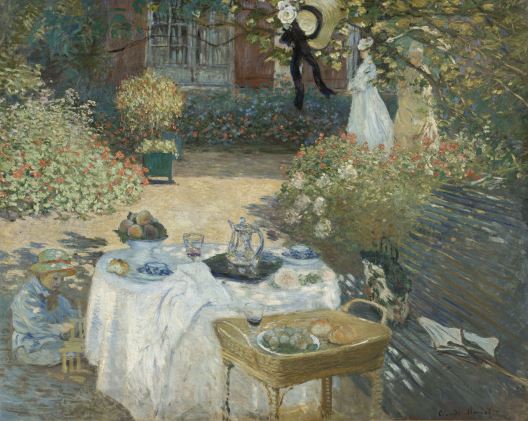
Monet’s oeuvre is vast and diverse, but several series stand out as masterpieces of Impressionism. Among them are his famous Haystacks, Rouen Cathedral, Water Lilies, and Houses of Parliament series. In these works, Monet explored the changing effects of light and atmosphere by painting the same subject at different times of the day and in various weather conditions.
His Haystacks series, painted between 1890 and 1891, showcases his fascination with how light alters perception. Each painting captures the same haystack under different lighting conditions, emphasizing how colors and shadows shift throughout the day.
The Rouen Cathedral series, completed in the 1890s, is another striking example of Monet’s innovative approach. He painted the cathedral’s façade multiple times, illustrating how the interplay of light and shadow transformed the structure. The paintings are not mere architectural studies but rather an exploration of how light itself can be the subject of art.
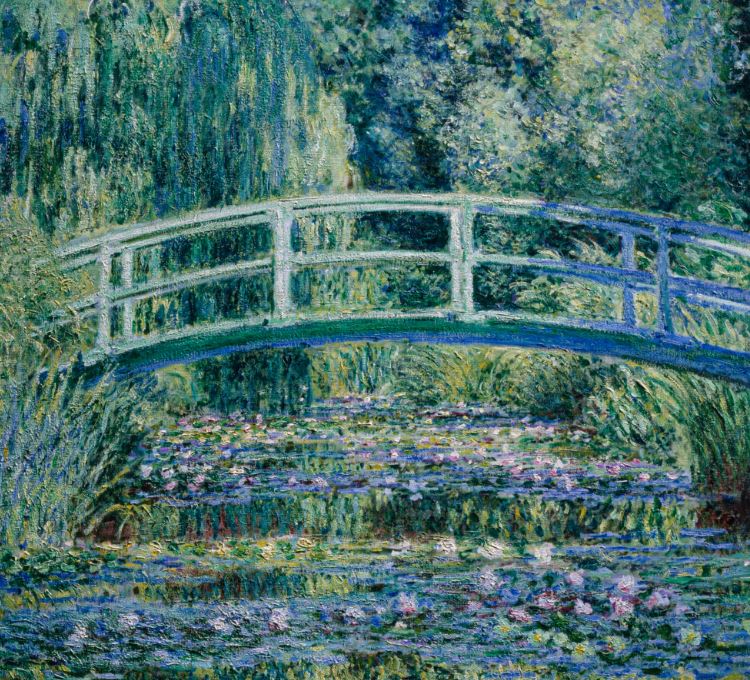
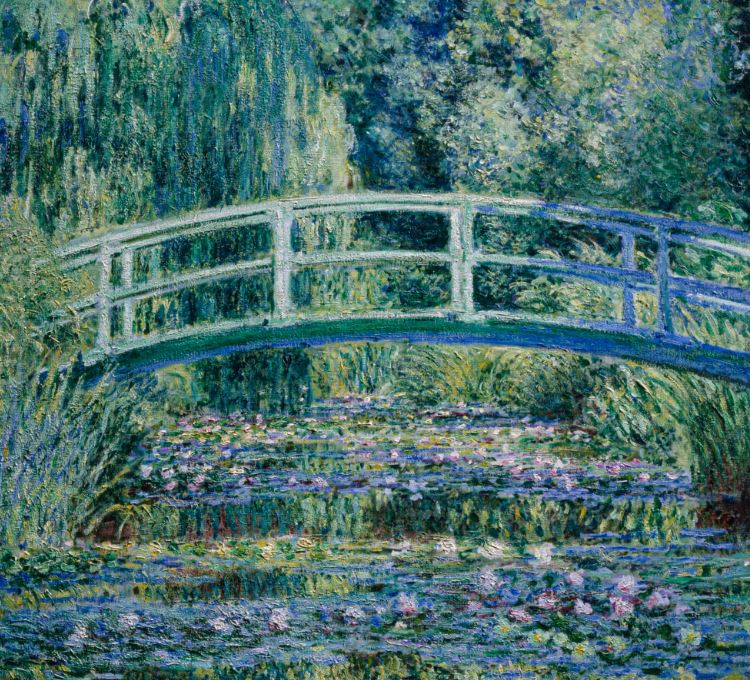
Perhaps the most iconic of Monet’s works are his Water Lilies, painted in his later years at his home in Giverny. This series, featuring tranquil ponds, floating lilies, and reflections of sky and trees, epitomizes Monet’s lifelong pursuit of capturing the ephemeral beauty of nature. These works are not just paintings; they are immersive experiences that draw the viewer into Monet’s serene and dreamlike world.

The Gardens of Giverny: A Living Masterpiece
In 1883, Monet settled in Giverny, a small village in Normandy, where he created one of the most famous gardens in the world. His property, featuring a Japanese-style water garden, a pond with water lilies, and a picturesque bridge, became both his sanctuary and his primary source of inspiration. Monet meticulously designed his garden to serve as a living canvas, where he could study and paint the ever-changing beauty of nature.
His obsession with capturing the effects of light on water reached its peak in Giverny. He spent hours observing the reflections in the pond, studying how the sky, trees, and flowers interacted with the rippling water. The result was the breathtaking Water Lilies series, which he painted relentlessly until his death.
Struggles and Triumphs
Despite his immense talent and artistic success, Monet faced numerous challenges throughout his life. Financial difficulties plagued him in his early career, forcing him to rely on the support of patrons and fellow artists. He also endured personal tragedies, including the death of his first wife, Camille Doncieux, in 1879, and later, the loss of his second wife, Alice Hoschedé.
In his later years, Monet struggled with cataracts, which significantly affected his vision. His paintings from this period exhibit a shift towards more abstract and blurred forms, as he adapted to his deteriorating eyesight. Nevertheless, he continued to paint, refusing to let his condition hinder his passion for art.
Legacy and Influence
Claude Monet passed away on December 5, 1926, at the age of 86. He left behind a body of work that forever changed the art world. Today, his paintings are housed in prestigious museums, including the Musée d’Orsay in Paris, the Metropolitan Museum of Art in New York, and the National Gallery in London.
Monet’s influence extends far beyond Impressionism. His exploration of color, light, and form paved the way for modern and contemporary art movements, including Abstract Expressionism. Artists such as Jackson Pollock and Mark Rothko drew inspiration from Monet’s immersive landscapes, recognizing the power of color and abstraction in evoking emotion.
The legacy of Monet also lives on in Giverny, where his home and gardens have been preserved as a museum, attracting thousands of visitors each year. Walking through the gardens, one can still experience the beauty that captivated Monet and fueled his artistic vision.
Conclusion
Claude Monet was more than just a painter; he was a visionary who transformed the way we see the world. His dedication to capturing fleeting moments, his innovative techniques, and his unwavering passion for nature made him a pioneer of modern art. Through his masterpieces, Monet invites us to pause, observe, and appreciate the ever-changing beauty of light and color. His legacy continues to inspire artists and art lovers alike, proving that true artistry transcends time and convention.
Discover more from French Glimpses
Subscribe to get the latest posts sent to your email.
