The Louvre is home to some of the world’s most famous masterpieces, from the Mona Lisa to the Venus de Milo. But behind the fame and the beauty lies a lesser-known side of the museum—its mysteries. Hidden meanings, unsolved riddles, unknown origins… some works in the Louvre carry secrets that still puzzle historians and visitors alike. Step into the shadowy side of art as we explore some of the most enigmatic pieces in the world’s most visited museum.

1. The Mona Lisa – More Than Just a Smile
You’ve seen her face a thousand times, but what do we really know about La Joconde? Is she Lisa Gherardini, as commonly believed? Or someone else entirely? Her ambiguous smile, her missing eyebrows, the dreamy landscape behind her—it’s a painting that invites infinite interpretations. Some believe da Vinci hid codes in her eyes. Others say the painting contains symbols of lost knowledge. One thing is certain: the Mona Lisa isn’t just famous—she’s fascinatingly unknowable.

2. The Code of Hammurabi – Laws or a Political Message ?
This massive basalt stele, engraved with the world’s first legal code, stands like a monolith from another world. But some scholars suggest it may not have been purely judicial. Was it a form of ancient propaganda, glorifying Hammurabi’s wisdom and divine authority? Why is one of the world’s oldest legal documents covered in astrological symbols? This isn’t just law—it’s layered with cosmic and political significance.
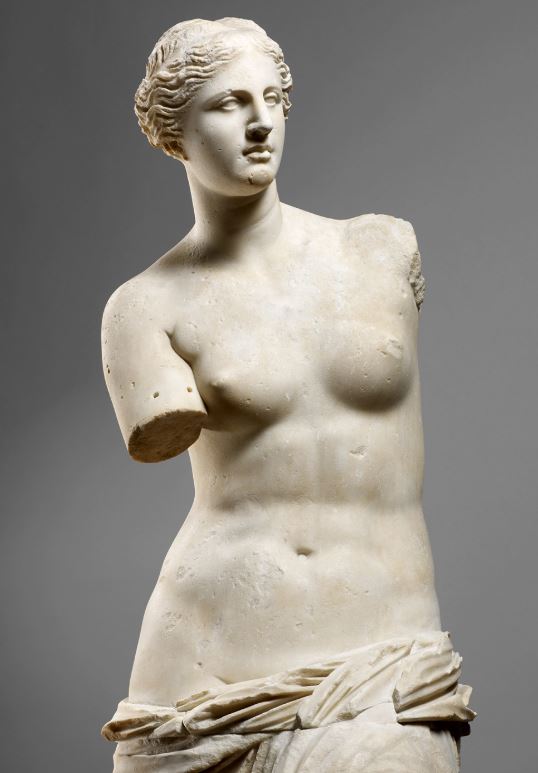
3. The Venus de Milo – The Goddess with No Arms and Many Theories
Discovered on the Greek island of Milos in 1820, the Venus de Milo has puzzled historians ever since. Who sculpted her? What were her original arms holding? Was she Aphrodite—or someone else entirely? Her twisting pose and serene expression suggest grace, but her missing limbs fuel centuries of speculation. Some believe she once held a shield; others think she was spinning thread or playing music.

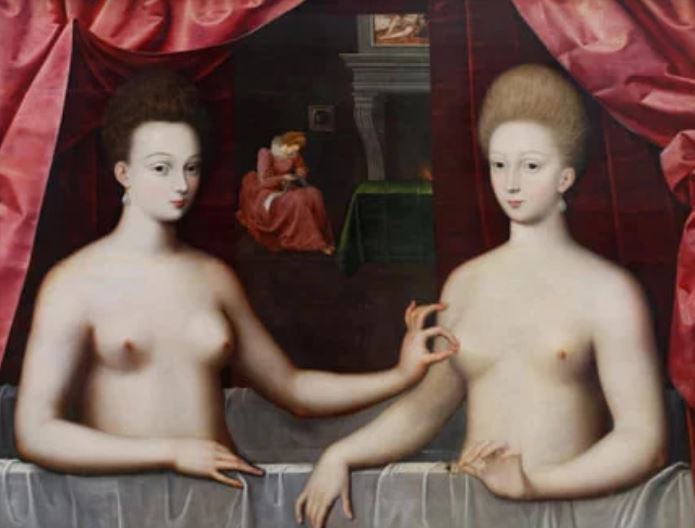
4. Gabrielle d’Estrées and Her Sister – Symbolism or Scandal ?
At first glance, it’s an intimate portrait of two women in a bath. But look closer: one pinches the other’s nipple. Is this a gesture of sisterhood? Or a coded announcement that Gabrielle, the mistress of King Henri IV, was pregnant with the king’s child? The painting blends sensuality with symbolism, and its true message remains debated to this day. It’s one of the Louvre’s most provocative—and puzzling—works.

5. The Seated Scribe – Who Was He, Really ?
The Seated Scribe, an ancient Egyptian statue with lifelike eyes and a surprisingly modern expression, has captivated viewers for centuries. But his identity is lost. Why was he immortalized with such detail, while pharaohs were idealized in stiff, divine forms? Who was this literate man who sat cross-legged, observing us from 4,000 years ago? His knowing gaze is eerie, almost as if he’s studying us more than we’re studying him.
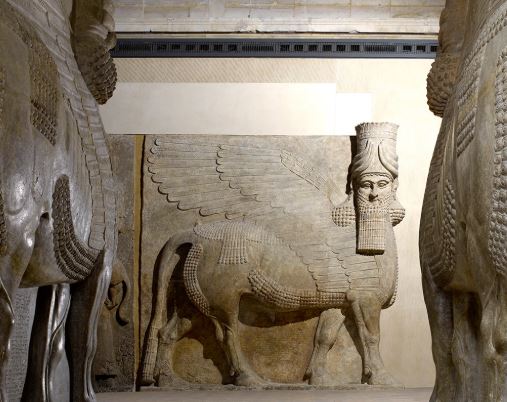
6. The Winged Bulls of Khorsabad – Guardians or Warnings ?
These giant Assyrian statues with the body of a bull, wings of an eagle, and human face once guarded the palace of King Sargon II. They are majestic—but also ominous. Their five legs are only visible depending on your angle of view, creating an optical illusion. Were they spiritual guardians? Symbols of power? Or early examples of psychological architecture meant to intimidate?
Discover more from French Glimpses
Subscribe to get the latest posts sent to your email.
