Beyond the Macarons and Museums lies a vibrating heartbeat of cheese, chaos, and community. Welcome to the Marché d’Aligre.
Paris is often described as a museum—a city frozen in the golden light of the 19th century, preserved in limestone and lace. But for those who find the manicured gardens of the 1st Arrondissement a bit too quiet, and for those who find the luxury of the 8th a bit too cold, there is a remedy. It is located in the 12th Arrondissement, tucked between the Place de la Bastille and the Nation: The Marché d’Aligre.
To visit Aligre is not just to “go shopping.” To visit Aligre is to participate in a centuries-old ritual. It is a sensory overload, a lesson in French sociology, and—if you play your cards right—the best meal of your life.
In this ultimate guide, we will peel back the layers of this legendary neighborhood, from the shouting produce vendors to the dusty treasures of the brocante, and the wine-soaked barrels of the local bistros.
Part I: The Triple Identity of Aligre
Most Parisian markets are fleeting; they pop up on a sidewalk on Tuesday and vanish by Wednesday. Aligre is different. It is a permanent fixture of the neighborhood, and it actually consists of three distinct markets operating in a chaotic, beautiful symphony.
1. The Outdoor Produce Market (Le Marché Découvert)
As you walk down Rue d’Aligre, the first thing that hits you is the sound. This is the “beating heart.” Unlike the polite, hushed tones of a supermarket, here you will hear the harangues—the melodic, rhythmic shouting of the vendors.
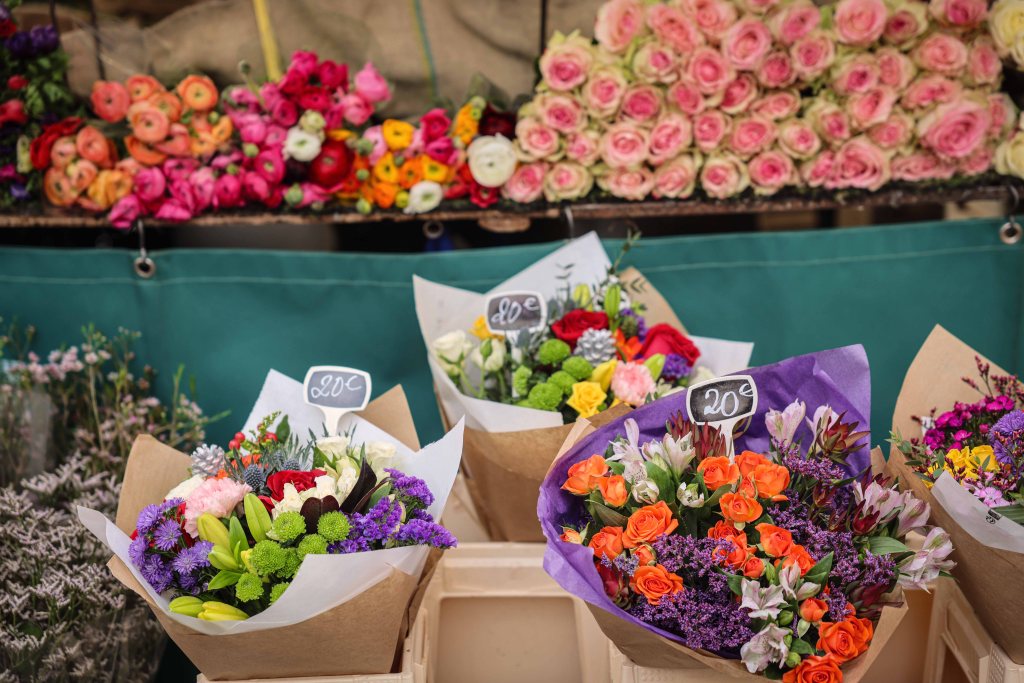
“Un euro le kilo ! Profitez-en, mesdames !” (One euro a kilo! Take advantage, ladies!)
The outdoor market is where you find the soul of the working-class Paris. It is a mosaic of colors: seasonal white asparagus from the Landes in spring, mountains of Reinette apples in the autumn, and fragrant herbs from North Africa year-round. Here, the prices are lower than anywhere else in Paris, especially if you arrive during the remballage (the pack-up) around 1:00 PM.
2. The Beauvau Covered Market (La Halle Beauvau)
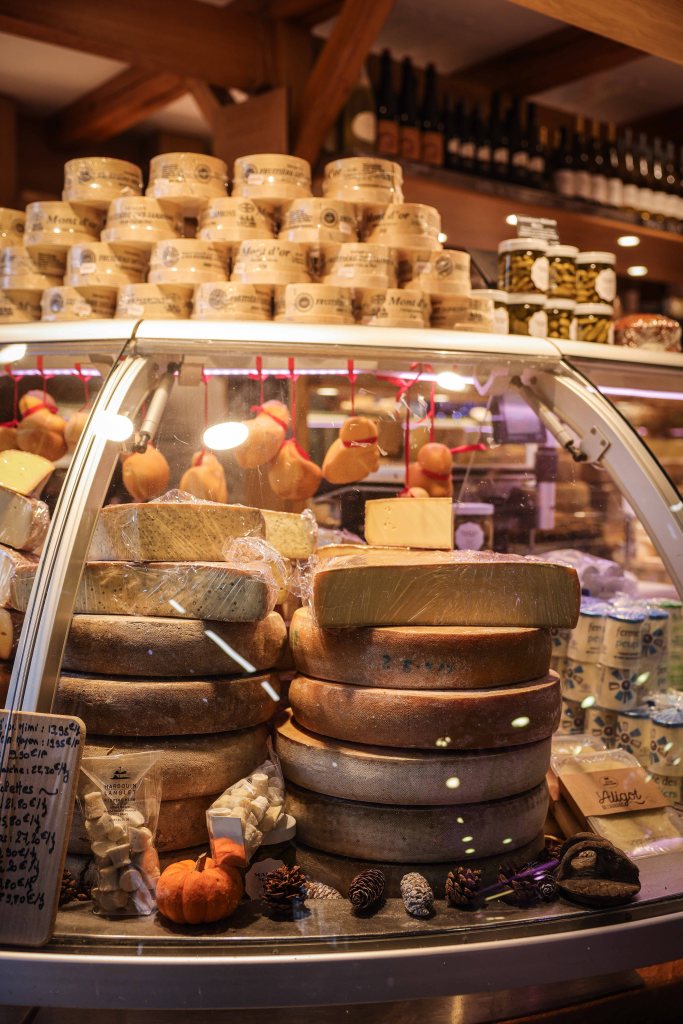
In stark contrast to the shouting outside, stepping into the Halle Beauvau feels like entering a cathedral of gastronomy. Built in 1843, its magnificent wooden roof structure resembles the hull of an upturned ship.
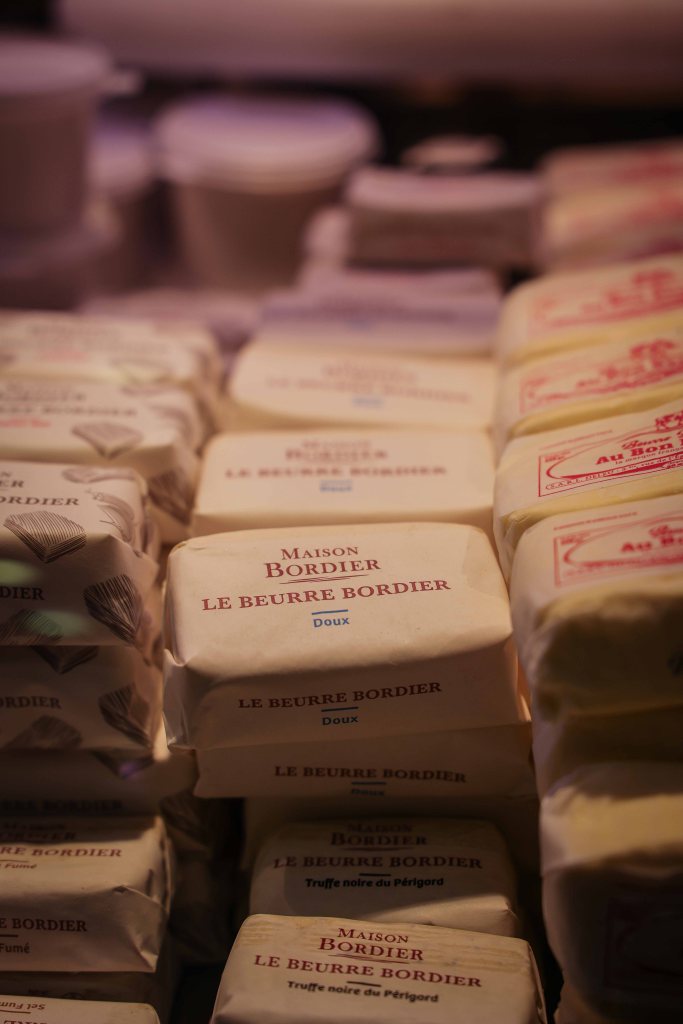
Inside, the atmosphere is huppé (fancy). This is where the serious “foodies” go. You’ll find world-class cheesemongers like Fromagerie Hardouin, where the Comté is aged to perfection, and high-end butchers who treat a cut of beef like a piece of fine jewelry. It is quiet, cool, and smells of truffle oil and aged goat cheese.

3. The Flea Market (La Brocante)
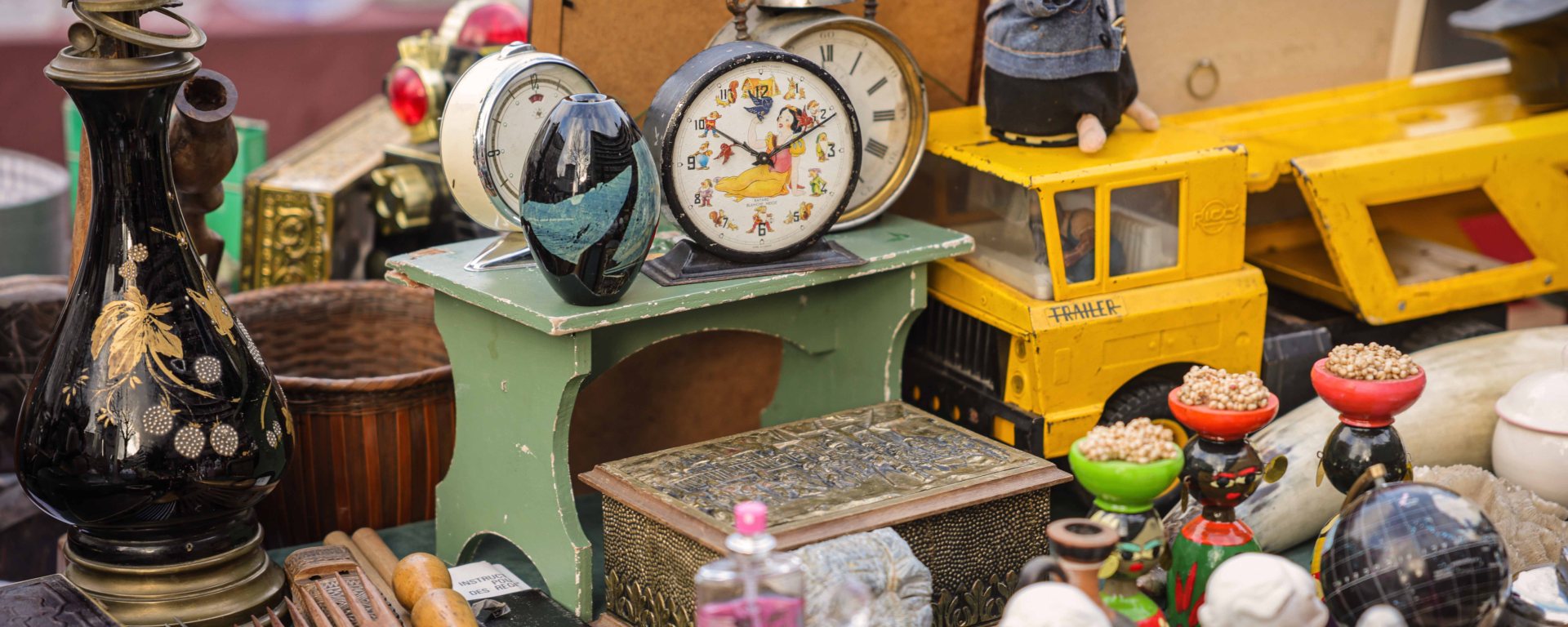
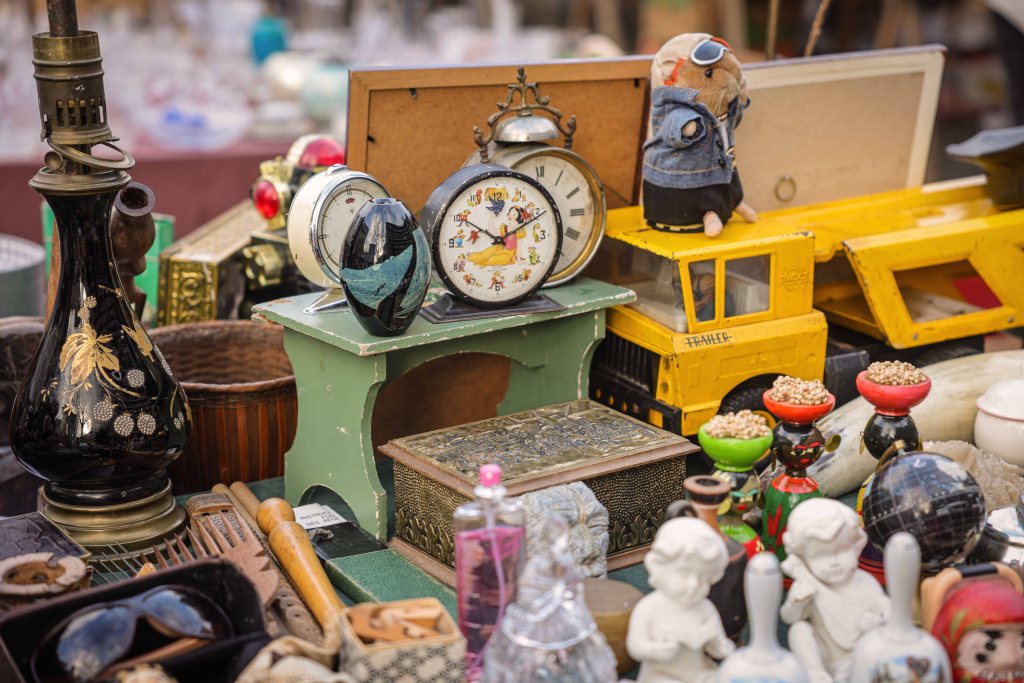
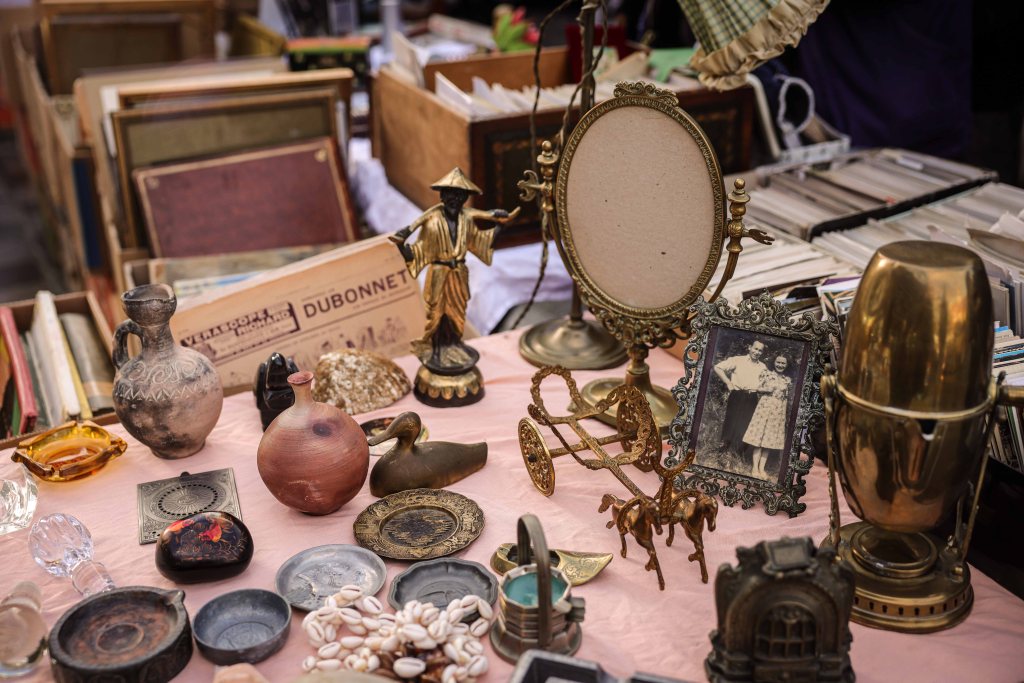
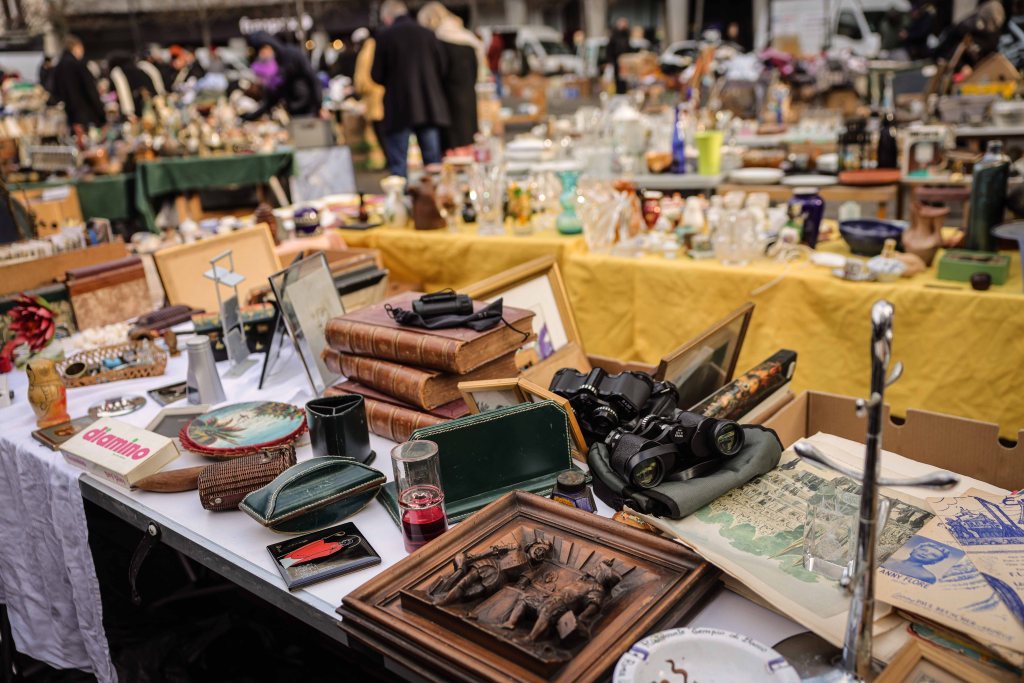
In the center of the square (Place d’Aligre), the vibe shifts again. This isn’t the high-end antique shopping of Saint-Ouen. This is a true vide-grenier (attic clearing) style flea market.
On any given morning, you might find a stack of vintage French Vogue magazines from the 1960s, a tarnished silver teapot, or a set of mismatched bistro plates. It is a place for hunters. The vendors are often crusty, old-school Parisians with a cigarette dangling from their lips, ready to haggle if you have the vocabulary for it.
Part II: The Ritual of the “Avant-Marché” and “Après-Marché”
For a true francophile, the market is merely the centerpiece of a larger social morning. To do Aligre like a local, you must follow the ritual.
The Morning Coffee
Start at Café Aouba. This is a legendary coffee roaster right on the Rue d’Aligre. There are no fancy sofas here; you drink your petit noir (espresso) standing at the counter or on the sidewalk, surrounded by bags of burlap coffee beans. It is the fuel you need before braving the crowds.
The Mid-Morning Break: Le Baron Rouge
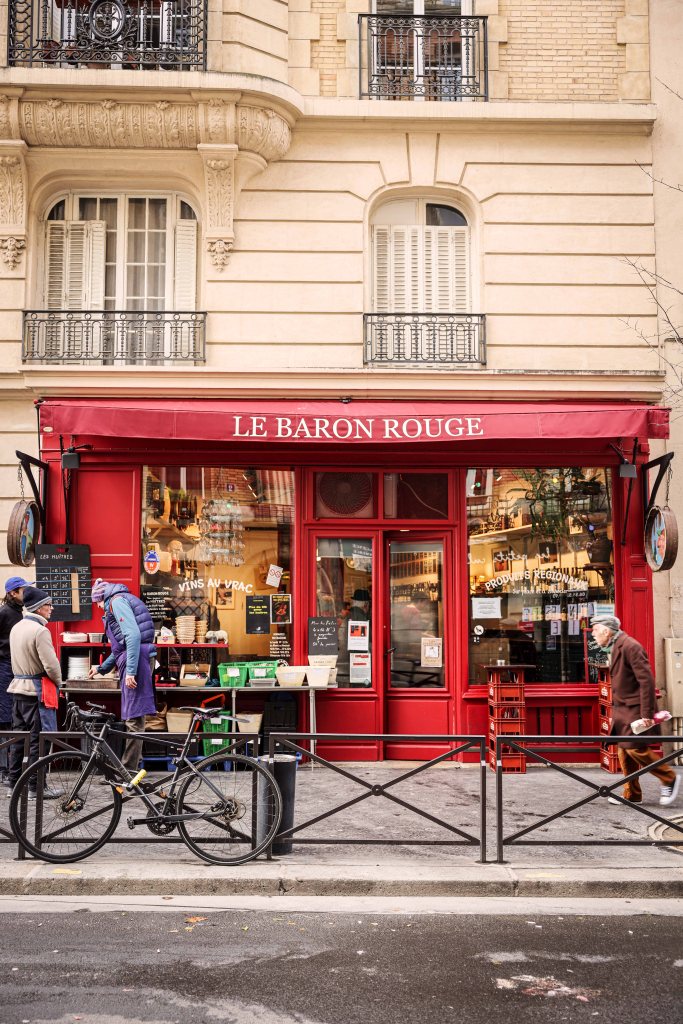
You cannot talk about Aligre without mentioning Le Baron Rouge. This wine bar is an institution. In the winter, they set up crates of fresh oysters outside. You buy a plate of six, a glass of crisp Muscadet, and you eat standing up, using a wine barrel as a table.
Inside, the walls are lined with floor-to-ceiling wine barrels. Locals bring their own empty glass bottles to be filled directly from the tap—a practice that is both eco-friendly and incredibly “Old Paris.” It is crowded, loud, and perfectly unpretentious.
The Lunch: From Couscous to Confit
After the market closes at 1:30 PM, the neighborhood doesn’t go to sleep. You have choices:
- The Traditionalist: Go to Le Charolais, a classic bistro where the steak frites is legendary.
- The Modernist: Try Table, a Michelin-starred spot nearby that uses the market’s freshest ingredients.
- The Local Secret: Grab a mint tea and a pastry at one of the many North African bakeries nearby, reflecting the beautiful multicultural history of the 12th.
Part III: How to Shop Like a Parisian (Etiquette and Tips)
To the uninitiated, the Aligre market can be intimidating. Here is how to navigate it without looking like a touriste.
- “Bonjour” is a Passport: Never, ever point at a fruit and ask the price without saying “Bonjour” first. In France, “Bonjour” isn’t a greeting; it’s a prerequisite for existence.
- Touch with your eyes, not your hands: At the outdoor stalls, let the vendor pick the produce for you. If you start squeezing the peaches, you will receive a very fast, very French lecture.
- Bring your own “Cabas”: Parisians don’t use plastic bags. Bring a tote bag or a rolling basket (caddie) if you want to blend in.
- The “Queue” is a suggestion: In the outdoor market, the lines are chaotic. Keep your ground, make eye contact with the vendor, and be ready when it’s your turn.
- Small change is King: While many vendors now take cards, having a pocket full of 1 and 2 euro coins will make your life much easier at the produce stalls and the flea market.
Part IV: Why Aligre Matters in 2026
In an era of Amazon Prime and standardized supermarkets, the Marché d’Aligre is an act of resistance. It represents a Paris that refuses to be gentrified into a mall.
When you see a grandmother arguing over the price of leeks next to a young tech worker buying organic cider, you are seeing the real social fabric of the city. For a francophile, this is the “Ultimate Experience” because it is uncurated. It isn’t a show put on for tourists; it is a living, breathing neighborhood that has looked and smelled roughly the same for a hundred years.
Discover more from French Glimpses
Subscribe to get the latest posts sent to your email.
