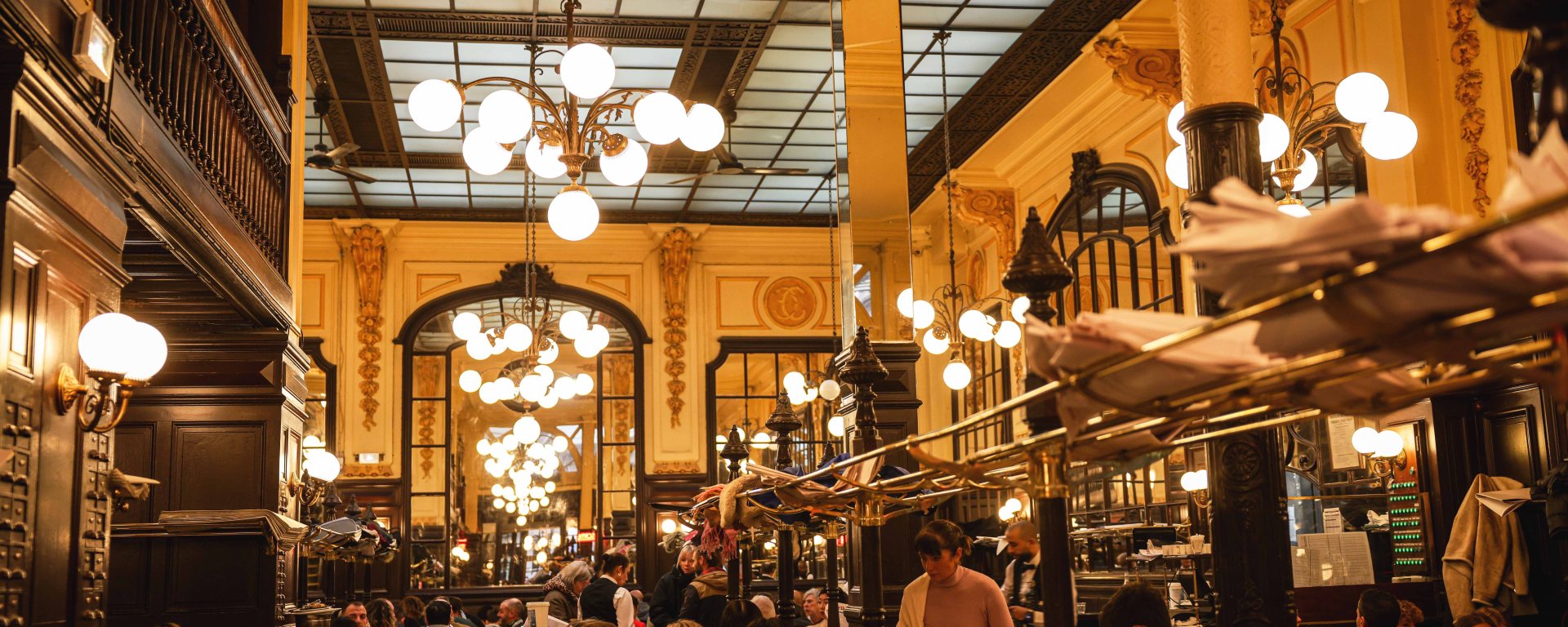
Are you dreaming of a Parisian dinner that feels like a scene from a vintage movie ? Bouillon Chartier Grands Boulevards is more than just a restaurant; it is a historical landmark offering a glimpse into the Belle Époque. From its eccentric “tablecloth receipts” to its secret connections with the world’s most famous artists, here is why this iconic brass-clad eatery is a must-visit.
A Revolutionary Concept in 1896
Long before “fast casual” was a buzzword, the Chartier brothers, Frédéric and Camille, had a radical idea: serve high-quality French cuisine to the masses at lightning speed and low prices. Opened in 1896, the restaurant was designed as a “Bouillon” (a broth house), serving the workers of the Grands Boulevards.
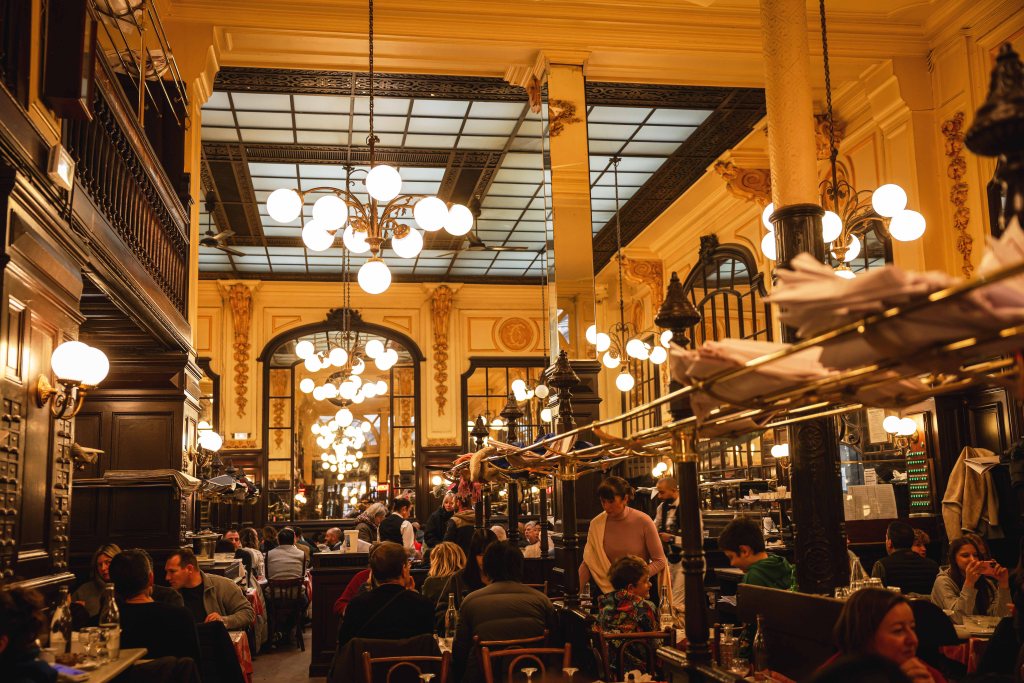
The architecture itself is a masterpiece of Art Nouveau. With its towering glass ceiling (the verrière), giant mirrors designed to make the room look infinite, and polished wood, it was a palace for the common man. To this day, the decor is protected as a National Historical Monument.
Famous Spirits and the “Lost Generation”
While the restaurant was built for workers, its proximity to the theater district made it a magnet for the creative elite.
- The Bohemian Haven: In the early 20th century, the Grands Boulevards were the beating heart of Parisian nightlife. It is widely whispered among local historians that struggling artists—including a young, penniless Amedeo Modigliani—would frequent the area.
- The Hemingway & Fitzgerald Era: During the 1920s, the “Lost Generation” of American expats, led by Ernest Hemingway and F. Scott Fitzgerald, sought out the authentic grit of Paris. Chartier offered exactly what they needed: cheap wine and a lively atmosphere. Hemingway often wrote about the “good café” and the “cheap restaurants” where one could eat well for a few francs—many believe Chartier was a blueprint for the bustling scenes in his memoirs.
- The Mystery of the “Drawer” Tables: Look closely at the sideboards. In the old days, regular patrons (often actors from nearby theaters or local shopkeepers) had their own personal silverware drawers. They would keep their own napkins and cutlery there, locked away for their next visit !
The Art of the “Tablecloth Bill”
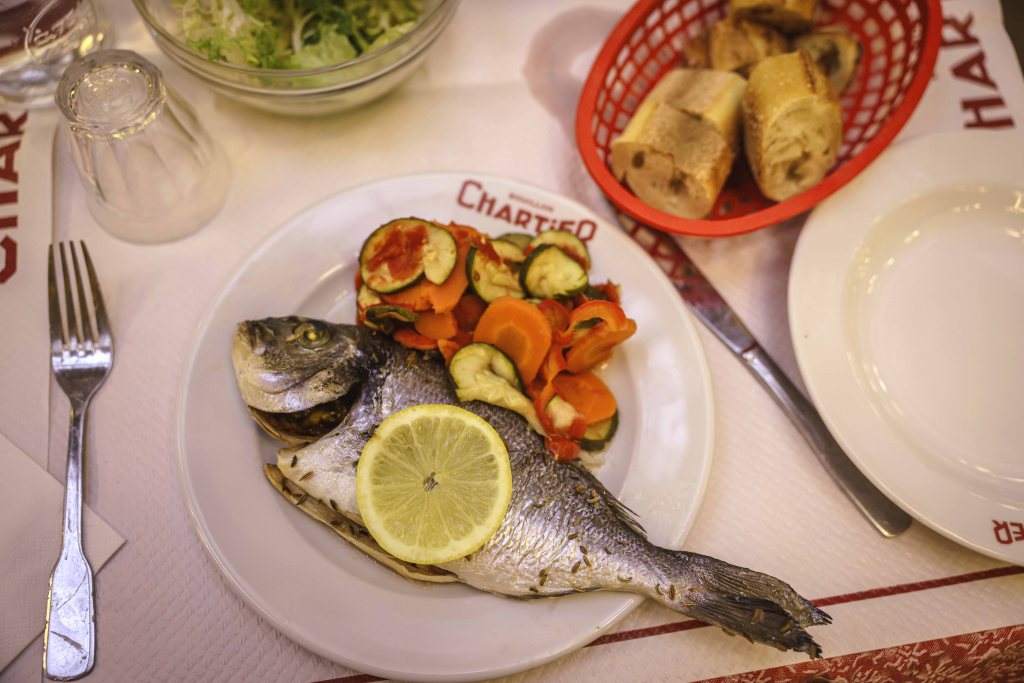
Perhaps the most famous anecdote involves the bill. At Chartier, your waiter—dressed in the traditional rondin (a tight black waistcoat and long white apron)—will not bring you a printed receipt. Instead, they scribble your order and the final sum directly onto the paper tablecloth. This isn’t just a gimmick; it’s a 125-year-old tradition. It was designed to save time and paper, allowing the “valets de chambre” to serve hundreds of people an hour. When you finish your meal, the waiter does the math in seconds right before your eyes. It is a performance of mental arithmetic that leaves most tourists reaching for their cameras.
A Cinematic Legacy
The restaurant’s timeless look has made it a favorite for Hollywood and French cinema alike. Fans of the film Amélie (Le Fabuleux Destin d’Amélie Poulain) will recognize the “Bouillon style” that defines the movie’s nostalgic aesthetic. It captures a version of Paris that exists nowhere else: noisy, crowded, unpretentious, and utterly beautiful.
Why It Matters Today
In an era of expensive tourist traps, Chartier remains fiercely loyal to its roots. You might be seated next to a local student, a fashion model in town for Fashion Week, or a family from across the globe. It is a democratic dining experience where the history of Paris is baked into the very walls.
Because Chartier doesn’t take reservations, it requires a little bit of “insider strategy” to make the most of your visit.
Here is your Essential Survival Guide to mastering the Bouillon Chartier experience like a true Parisian.
Timing Your Visit: How to Beat the Queue
The line at Chartier is part of the legend, often stretching down the courtyard and onto the sidewalk of Rue du Faubourg Montmartre.
- The Golden Hour: To walk straight in, aim for 11:30 AM for lunch or before 6:30 PM for dinner. Parisians eat late, so the rush hits hard between 8:00 PM and 9:30 PM.
- The Afternoon Secret: Chartier stays open “en service continu” (all day long). If you fancy a late lunch at 3:00 PM or an early dinner at 5:30 PM, you’ll have the pick of the best tables under the glass roof.
- Don’t Fear the Line: If you do end up in the queue, don’t panic. With over 300 seats and a lightning-fast staff, the line moves much faster than you’d expect!
The “Must-Order” Menu (The Classics)
The food at Chartier is about tradition and simplicity. It isn’t fine dining; it’s comfort dining. Here is what you should order for the quintessential experience:
| Dish | Why you should try it |
| Escargots (Snails) | A French rite of passage! They are served in the shell with plenty of garlic, parsley, and butter. Use the bread to soak up every drop of the sauce. |
| Confit de Canard | The gold standard of “Bouillon” main courses. Crispy duck leg preserved in its own fat, usually served with golden roasted potatoes. |
| Chou à la Crème | For dessert, don’t miss this giant cream puff drizzled with warm chocolate sauce. It’s light, decadent, and the perfect finish. |
Pro-Tips for a Smooth Evening
- Embrace your Neighbors: Expect to be seated at a large table with strangers. It’s the law of the Bouillon! Don’t be shy—say “Bonjour” when you sit down. It’s the perfect way to meet locals or fellow travelers.
- The Wine Hack: Order the “Pichet” (carafe) of house wine. It is surprisingly decent and incredibly cheap, keeping in the spirit of the 19th-century worker’s meal.
- The Luggage Racks : Look up! The brass racks above your head aren’t just for decoration. They were originally for 1900s commuters to store their coats and bags while they ate. Feel free to use them for your shopping bags!
- Cash or Card ? While they do take credit cards, having some cash for a small tip (a few Euros) is a nice gesture for the waiters, who are some of the hardest-working people in the city.
Discover more from French Glimpses
Subscribe to get the latest posts sent to your email.
