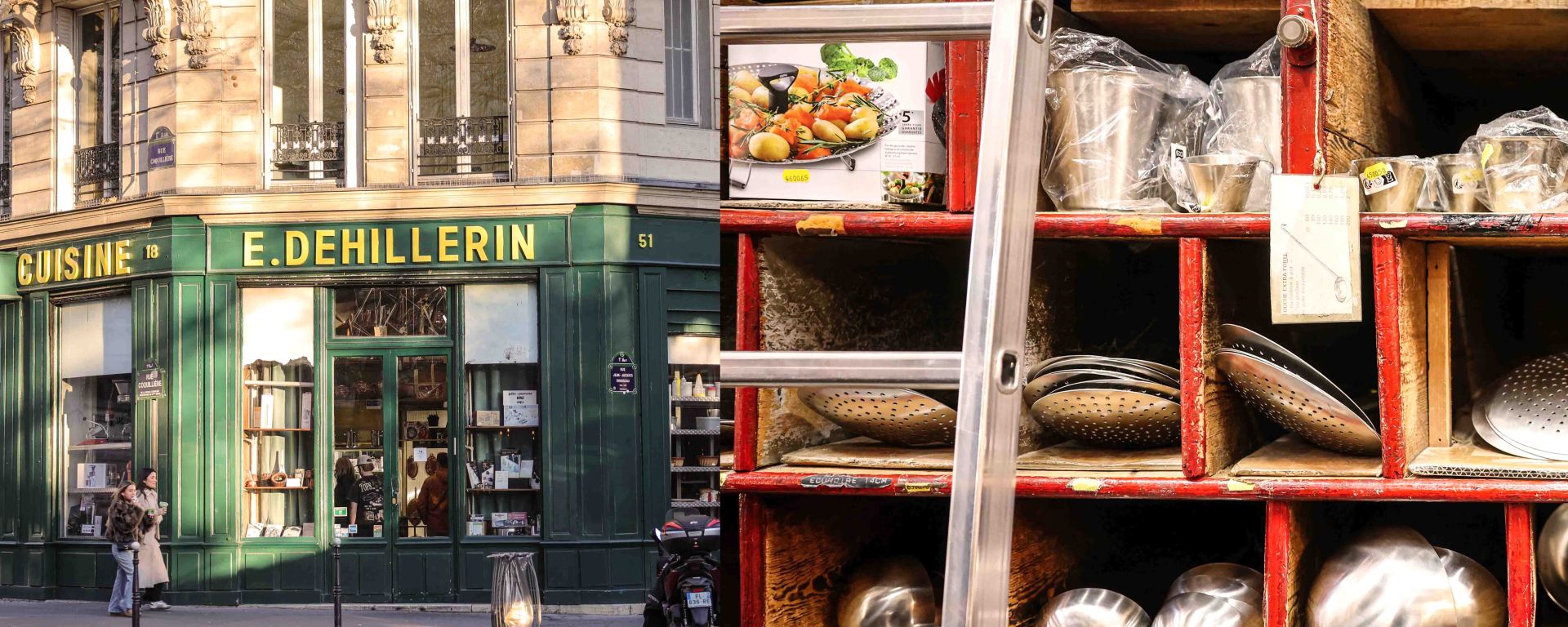
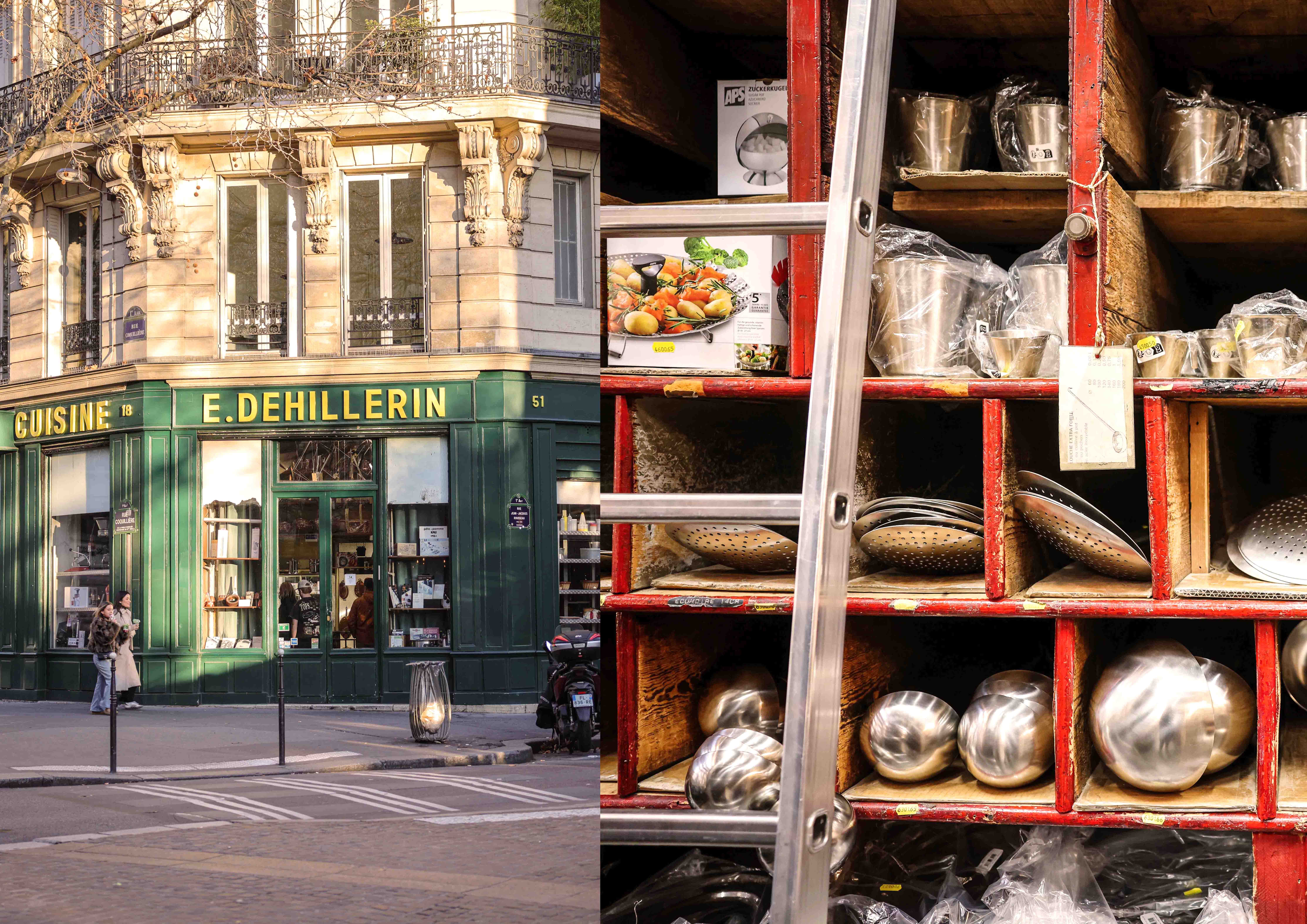
If you walk through the Les Halles district, past the modern glass canopy of the Châtelet station and the bustling cafés, you will find a corner at 18 Rue Coquillière that seems to have defied the laws of time. The storefront is a deep, forest green. The gold lettering above the door reads simply: E. Dehillerin.
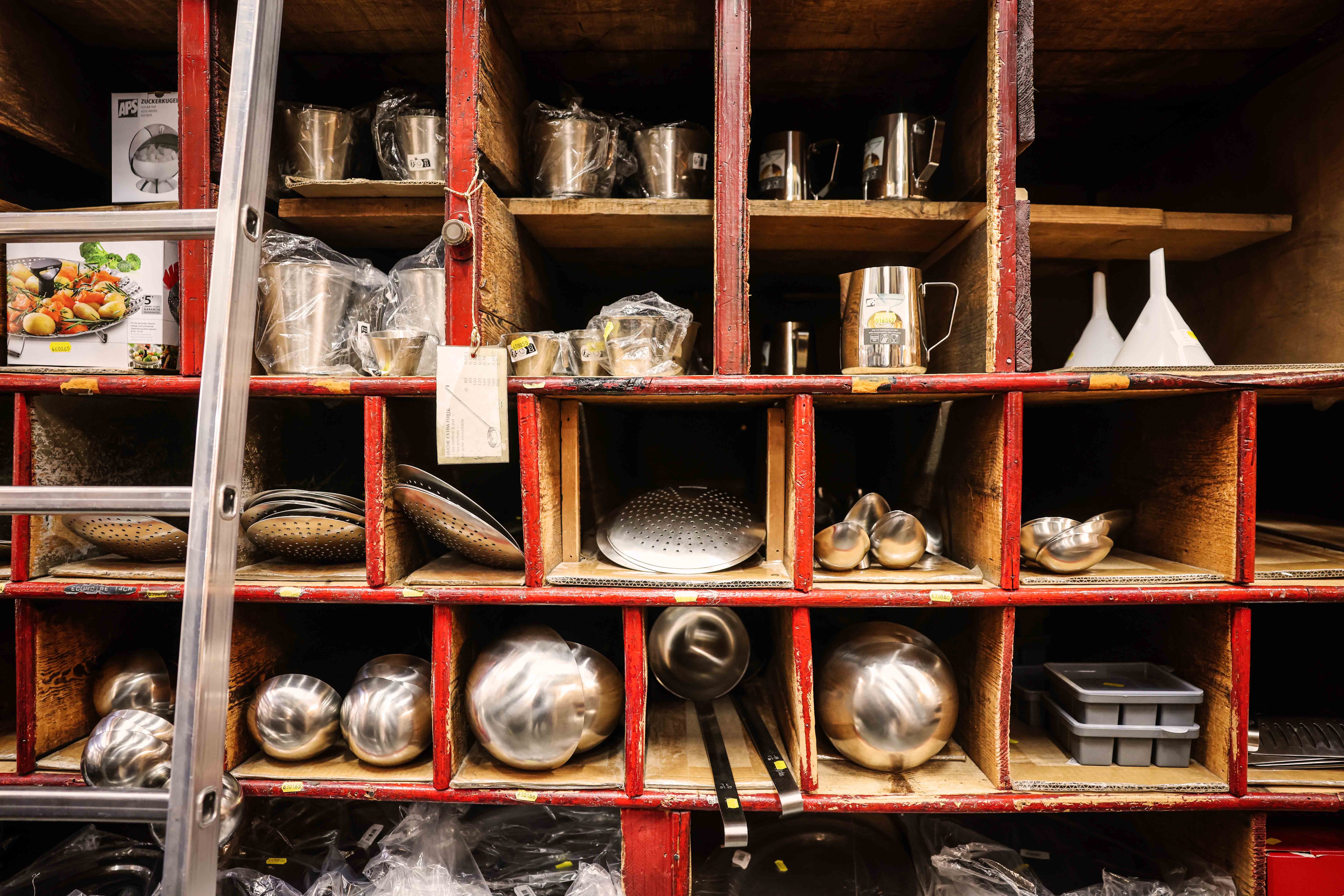
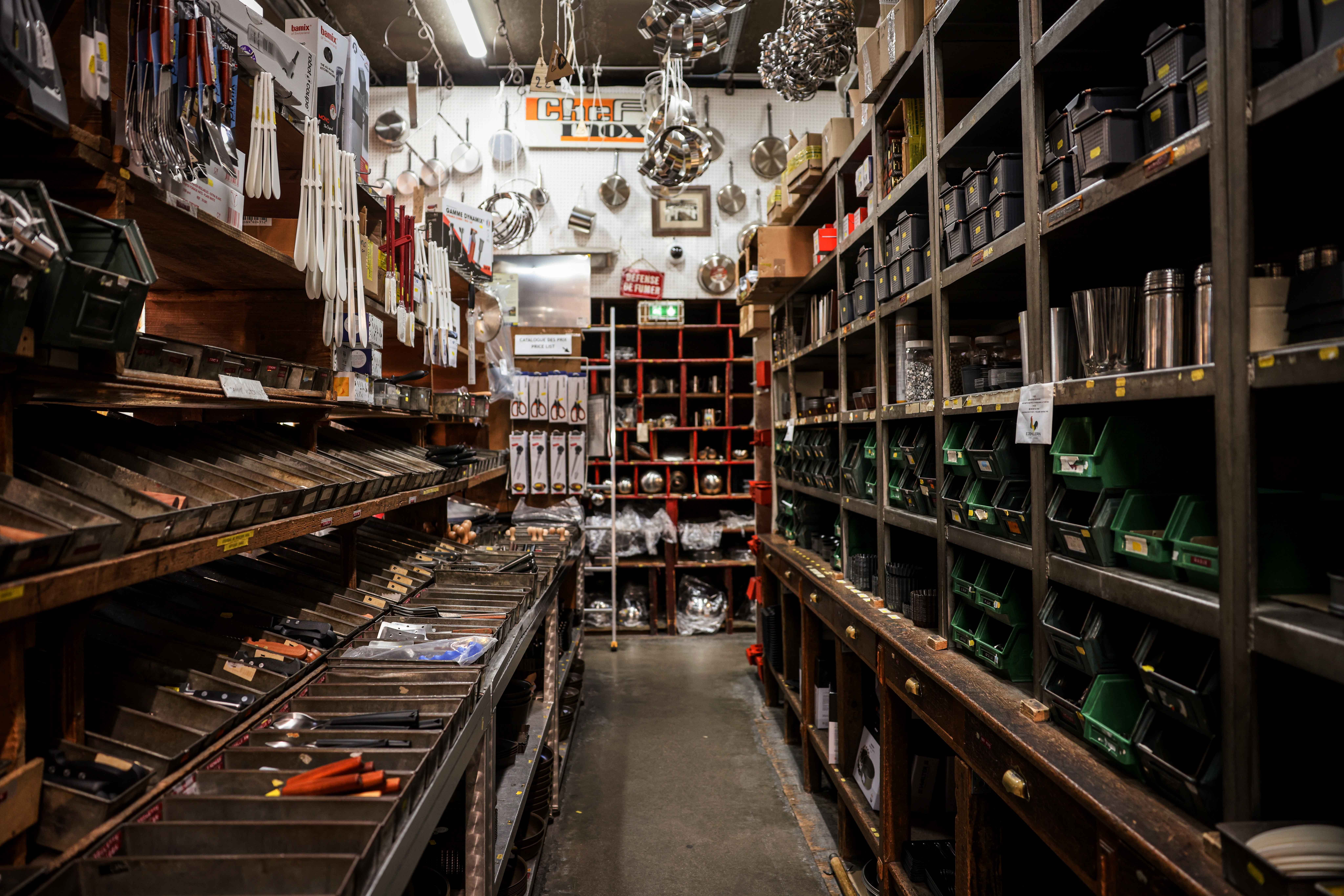
Pushing open the heavy door is like stepping into a 19th-century workshop. There is no background music here, no sleek displays, and certainly no digital screens. Instead, there is the heavy, comforting scent of beeswax, unlined copper, and old wood. There is sawdust on the floor to catch the moisture, and rows upon rows of shelves that stretch toward the ceiling, groaning under the weight of heavy-gauge metal.
For the professional chef and the passionate home cook alike, E. Dehillerin is more than a store. It is a cathedral. It is the place where the “French Way” of cooking was forged, one copper pan at a time.
I. Two Centuries of Culinary Heritage
Founded in 1820 by Eugène Dehillerin, this establishment has survived revolutions, wars, and the total transformation of the surrounding neighborhood. When the great central markets of Paris—Les Halles—were known as the “Belly of Paris,” Dehillerin was the primary supplier for the butchers, bakers, and chefs who fed the city.
The philosophy of the house has never changed: “Aider modestement à la gloire de la cuisine française” (To contribute modestly to the glory of French cuisine).
Inside, the family-run business (still in the hands of the Dehillerin family) maintains a system that baffles the modern shopper but delights the purist. There are no price tags on the items. You must find the small numbered tag on a pot, look it up in a massive, worn ledger (the catalogue), or ask one of the staff members—often clad in blue work jackets—who know every inch of the thousands of items in stock.
II. The Julia Child Connection: Where a Legend Was Born
For my American readers, E. Dehillerin is sacred ground because of one woman: Julia Child.
When Julia arrived in Paris in 1948, she was a woman looking for a purpose. She found it here. In her memoir, My Life in France, she describes her first visits to Dehillerin as a spiritual awakening. She wandered these aisles, overwhelmed by the weight of the copper sauté pans and the precision of the knives.
It was here that she bought her first “real” French kitchen equipment—the heavy pots that would eventually follow her back to her famous kitchen in Cambridge, Massachusetts (which is now preserved in the Smithsonian Museum). Julia loved Dehillerin because it wasn’t fancy; it was professional. It was serious.
When you stand in front of the wall of copper, you are standing exactly where Julia stood when she decided to translate the secrets of French cooking for the world. To buy a whisk or a tart ring here isn’t just a purchase; it’s a connection to that legacy.
III. The Magic of Copper: Why It Matters

The star of the show at Dehillerin is, without a doubt, the copper.
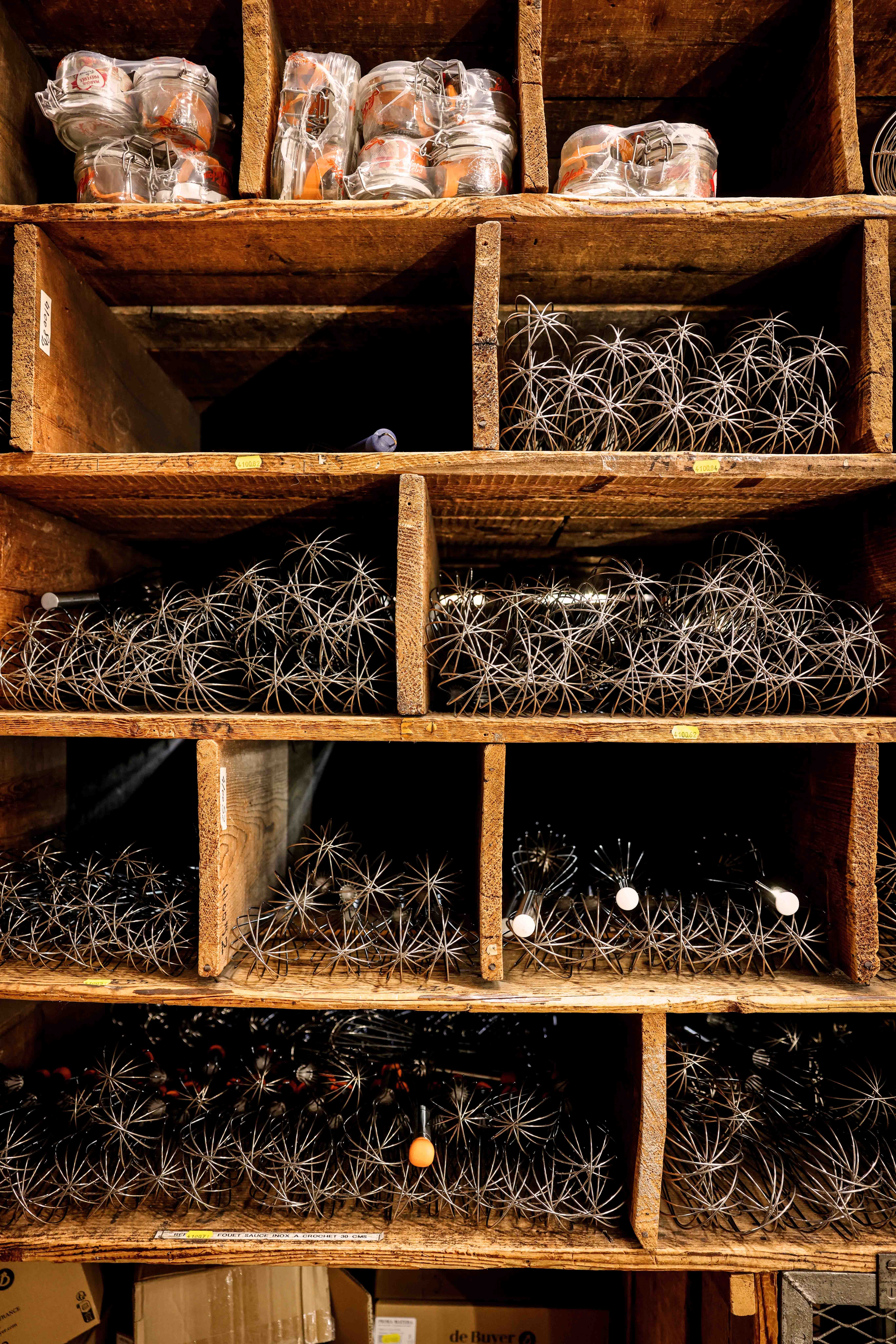
In an era of non-stick coatings and disposable pans, the heavy-gauge copper at Dehillerin feels eternal. French chefs prefer copper because of its incredible thermal conductivity—it heats up instantly and cools down just as fast, giving the cook total control over a delicate sauce or a caramel.
But beyond the science, there is the beauty. The deep, warm glow of a hand-hammered copper tarte tatin mold or a massive stockpot is the ultimate symbol of the “French Countryside” aesthetic. They are objects that are meant to be used for fifty years, polished with pride, and passed down to the next generation.
IV. Unique Finds for your “French Retro” Décor
Even if you aren’t a Michelin-starred chef, Dehillerin is a treasure trove for finding unique, authentic pieces that bring that “Je ne sais quoi” to your home. Here are a few items I always recommend looking for:
- The Individual Soufflé Molds: Tiny, porcelain or copper ramekins that make any dinner table look like a Parisian bistro.
- The “Moulin à Légumes”: The classic hand-cranked food mill. It’s a beautiful, sculptural object that produces the silkiest mashed potatoes you’ve ever tasted.
- Butter Curlers and Garnishing Knives: Small, inexpensive wooden-handled tools that look wonderful displayed in a ceramic jar on your counter.
- Traditional Canelé Molds: These copper fluted cylinders are iconic. Even if you don’t bake the cakes, a cluster of them on a shelf adds a perfect touch of Bordeaux charm to your kitchen.
- The Snail Plates: Heavy ceramic or metal plates with indentations for six or twelve escargots. They are incredibly retro and quintessentially French.
V. The Art of the Flâneur: How to Visit
Visiting Dehillerin requires a certain etiquette. It is a place of work, not a souvenir shop.
- Take your time: Don’t rush. Let your eyes adjust to the dim light and the dizzying amount of metal.
- Look at the details: Notice the old wooden ladders used to reach the top shelves and the vintage scales.
- Ask for help: The staff may seem intimidating at first, but they are masters of their craft. If you tell them what you like to cook, they will find the perfect tool for you.
- The “Check-Out” Ritual: Buying something here is a process. You get a handwritten slip, you go to a separate wooden booth to pay, and then your item is wrapped in simple brown paper. It is a slow, beautiful ceremony.
A Kitchen with a Soul
In a world that is moving faster and faster, E. Dehillerin stands as a testament to the power of doing one thing perfectly for 200 years. It reminds us that cooking is not just a chore, but an act of love, tradition, and craftsmanship.
Whether you leave with a professional chef’s knife or just a small pastry brush, you carry a piece of the Paris “Halles” history home with you. You carry the spirit of Julia, the weight of the copper, and the soul of the French table.
My Recommendations Nearby:
If you’ve spent the morning exploring the aisles of Dehillerin, you’ll be hungry. Here are my favorite spots just steps away:
- Au Pied de Cochon: A legendary brasserie open 24/7. Order the onion soup—it’s the best in the area and very “Old Paris.”
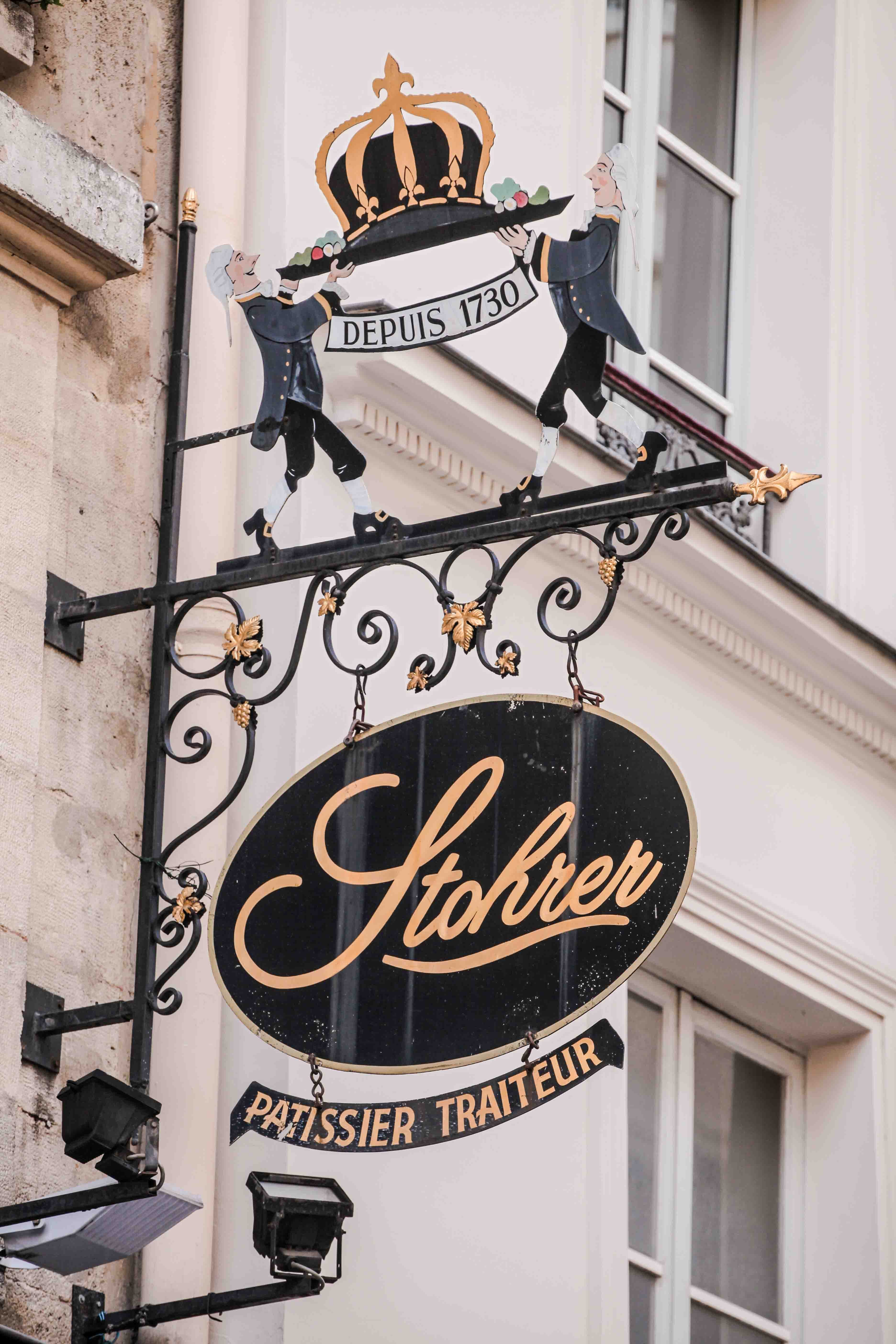
- Stohrer: On Rue Montorgueil. It’s the oldest pâtisserie in Paris (1730). Their Baba au Rhum is the stuff of dreams.
- A. Simon: Another great kitchenware store nearby. It’s a bit more modern than Dehillerin but wonderful for finding beautiful glassware and white bistro plates.
Discover more from French Glimpses
Subscribe to get the latest posts sent to your email.
