Pip: French Glimpses is the kind of site that makes you feel underdressed for your own kitchen — today we have flans, hidden courtyards, and the quiet argument that Paris rewards people who actually slow down.
Mara: Elisabeth Perotin is our guide for this episode, and she's covering two distinct territories: the craft behind a classic French dessert, and a deep neighborhood walk through Le Marais. Let's start with the flan.
The Craft Behind the Flan
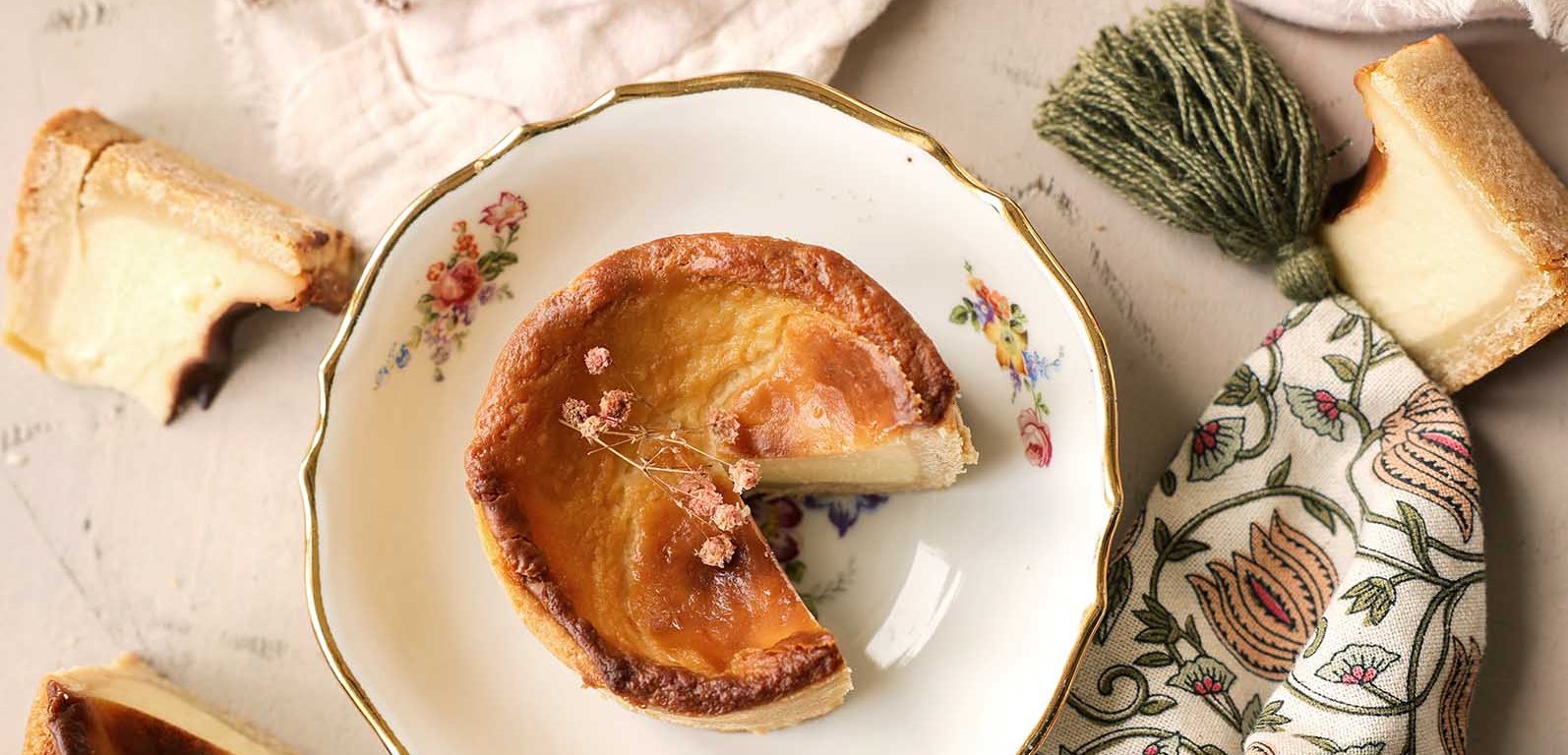
Pip: The flan pâtissier is the post that asks a deceptively simple question — why does a dessert with no decoration, no glaze, and no drama hold such a central place in French food culture?
Mara: The post frames it directly: "In a country that prides itself on artistic complexity, the flan is loved for its absolute sincerity. It cannot hide behind decoration, glaze, or fresh berries. It is completely naked."
Pip: That nakedness is the whole point — a flan either works or it doesn't, which is why the post treats temperature management as a structural decision, not a baking tip. Cold custard into a hot oven creates the bronze skin; the interior stays dense underneath.
Mara: The recipe itself is Nina Métayer's, scaled to individual 8-centimeter rings. The two-piece lining method — a disc for the base, a separate band for the walls — exists specifically because forcing a single sheet into a small ring tears the pastry and produces uneven thickness.
Pip: So the architecture of the shell is engineered before anything goes in. That changes how you read the recipe entirely.
Le Marais, Off the Beaten Path
Pip: The Le Marais guide sets up a tension worth naming: one of Paris's most visited neighborhoods still has a version of itself that most tourists never find.
Mara: The post puts it plainly: "While most tourists flock straight to the Place des Vosges, there is a secret, more intimate side to this historic district waiting to be captured by those who know where to look."
Pip: Which means the guide is doing something practical — it's a reordering of priorities, not just a list of addresses.
Mara: The Musée de la Chasse et de la Nature leads the list, tucked inside two 17th-century mansions, described as a surrealist cabinet of curiosities where contemporary art sits alongside antique taxidermy. The ceiling by Jan Fabre, covered in iridescent beetle wings, is flagged as the detail not to miss.
Pip: That's a museum that sounds like it was designed specifically to reward people who read past the first paragraph of a guidebook.
Mara: The Musée Carnavalet follows — 150 rooms tracing Paris from prehistoric times to the present, and the permanent collection is free. The post also highlights the Marché des Enfants Rouges, the oldest covered market in Paris, established in 1615, as the neighborhood's culinary anchor.
Pip: And then there's the Square Saint-Gilles Grand-Veneur — a rose garden completely enclosed by residential buildings, invisible from the street. The guide frames it as the spot for the quiet Parisian moment that most itineraries skip entirely.
Mara: The list closes at Place des Vosges, but by that point the guide has already reframed it — it's the destination you arrive at after the neighborhood has already done its work on you.
Pip: Which is a pretty good argument for slowing down in general.
Mara: A dessert that can't hide its flaws and a neighborhood that hides its best features — there's something consistent in that.
Pip: More of that consistency next time, hopefully. We'll be back.
Discover more from French Glimpses
Subscribe to get the latest posts sent to your email.
